I spent two years pulling this apart as a line of inquiry.
I was nose-deep in my learning specialist course, and one of my mentors kept coming back to the same question. Why does the explicit teach need to come from the adult?
I'd always known, on a surface level, that giving kids a voice was powerful. But that question cracked something open. So I spent the next two years testing it - what if the room becomes a living, breathing, all-encompassing space of thinking when the learning comes through the kids, not at them?
We flipped the script wherever we could. The biggest move that came out of it: embedding real samples from real kids inside the lessons themselves.
Here's the thing nobody warns you about. Once you commit to this approach, you'll spend hours in your planning sessions Googling for real persuasive writing by real kids. And what do you find? Fake samples. Pieces written by adults pretending to be kids, designed to look authentic but landing nowhere near it. How is it so hard to get your hands on the real thing?
The room leans in for the real thing. That's the bit worth fighting for.
What does the research actually say?
The short version: this practice has three names, and all of them are solid.
Victoria's Department of Education lists worked examples as one of ten High Impact Teaching Strategies - showing kids a finished version of the task with the steps visible, so cognitive load drops and skill acquisition becomes easier. Internationally, cognitive scientist John Sweller's worked example effect research has shaped instructional design for thirty-plus years. Most teachers in literacy call it a mentor text, used in both reading and writing - a strong piece kids slow down on and learn from.
Three names. One practice.
The piece nobody quite says out loud: this only works when the kid connects with what they're seeing. Big difference between passive engagement and active. A creation by another kid - same age, same country, real name attached - is what unlocks the second.
So what does this look like in practice?
A persuasive piece is a good place to start. Pop it up on the classroom TV during a shared read and edit it as a class. Where are the persuasive features doing the work? Pull out the modal language together - must, should, every kid in this school - and ask why that writer made that choice. This is where kids stop guessing what good writing looks like and start naming it.
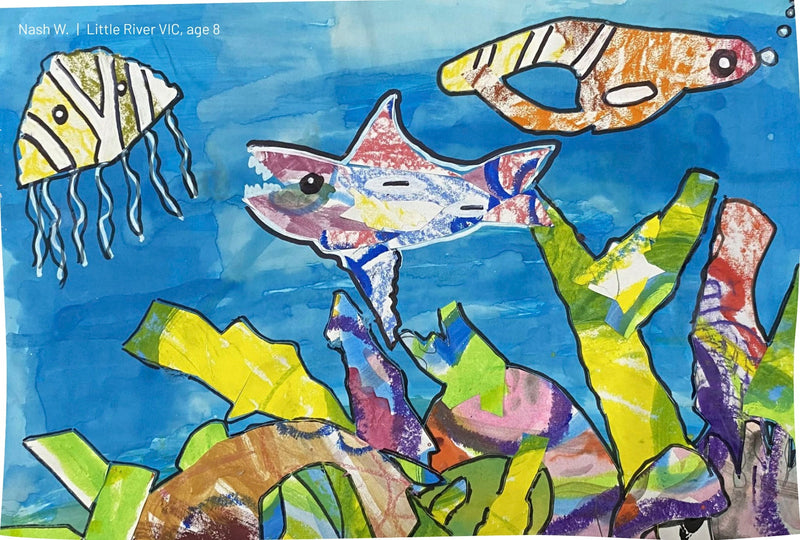
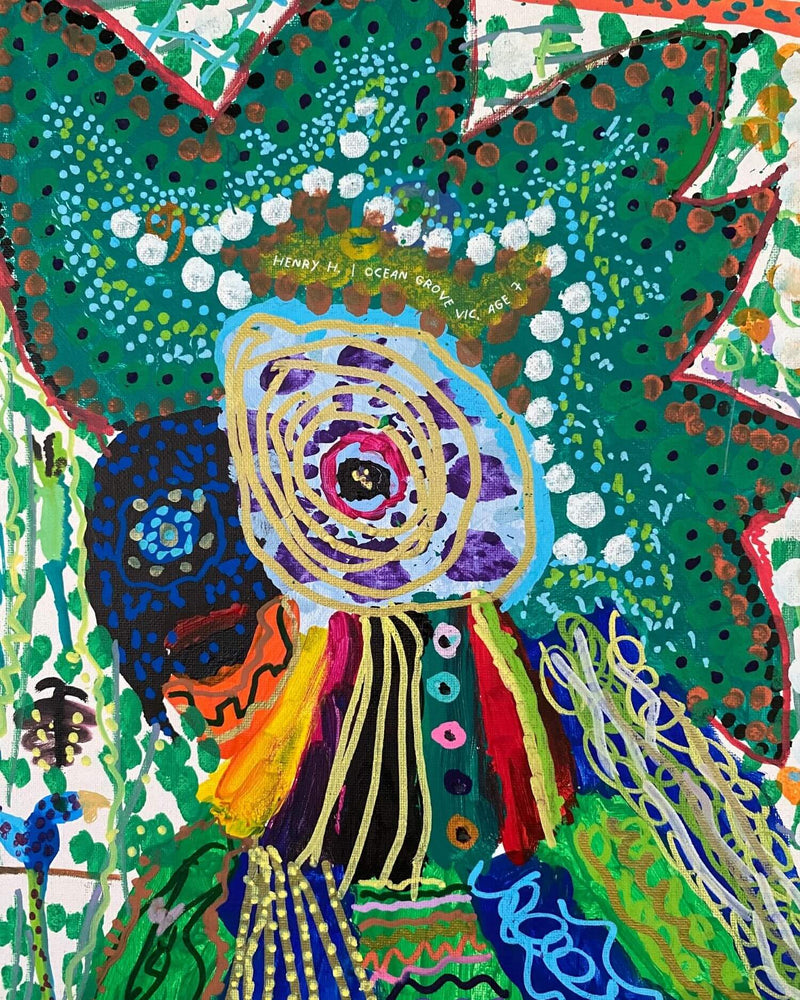
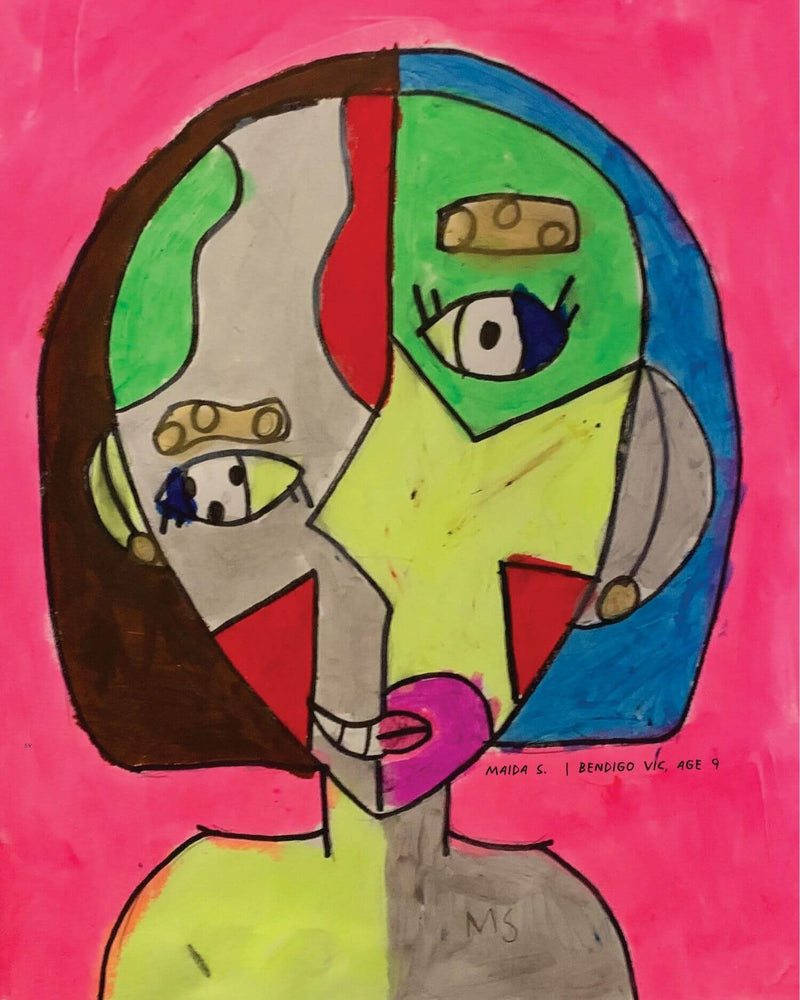
Art pieces work a different angle. Not for art lessons, weirdly. Pick a strong, slightly weird painting or photo and use it as an open question for the room. What happened 16 seconds before this was made? Or: what's the person in this picture about to say? The art is just the runway. The lesson is the thinking, the bouncing, the collaborating that follows.
Then there's maths. Great mathematicians ask great questions - and the best way to answer questions is to ask more. We had a kid send in this one: how fast can I run? And how would I mark my speed on a graph compared to different animals around the world? Look at how much numeracy is hiding inside that question. Measurement, data, ratios, graphing, comparison, estimation. Low floor, high ceiling. Every kid in the room has a way in. Genuinely made by a kid.
Why does this hit harder than the alternatives?
Kids can smell a manufactured example from across the room. When the sample came from another kid, the whole thing snaps into focus. This is real. Another kid made it. So I can make one too. That's the authenticity piece, and it does most of the heavy lifting.
The engagement also comes pre-baked. Kid creations tend to be about the stuff kids actually care about - their pets, their hobbies, the obsessions that make them them. When a kid is genuinely interested in what they're reading or looking at, half a teacher's job is already done.
And the bit nobody talks about: permission. When kids see another kid's piece in print with a spelling mistake or a sentence that doesn't quite land, something releases. The class spots it. Suddenly the bar shifts. You don't have to get it perfect to put it out there. Perfectionism is one of the biggest things killing kids' creative output, and the antidote is showing them that real published kids are imperfect too.
What if you're homeschooling?
Same move, smaller room. Maybe more powerful, even.
If you're in a family where every day feels like a fight to get reading or writing happening, the shift comes from launching with something the kid is already excited by. Show them a piece written by a kid their age about something they love - dirt bikes, axolotls, baking, Minecraft - and the resistance softens.
There's another piece to this for homeschool families specifically. Homeschooling can be isolating. A homeschool kid doesn't always get to see what other kids are creating, what other kids care about, what other kids sound like on the page. Real samples from kids around Australia open that window for them. They're not just learning from a sample. They're meeting their peers.
And once that window opens, the door's right behind it. Could you make one? Could you write yours? Often, they go off and create something entirely of their own.
Where do you find the samples?
Some are already in your filing cabinet. Save the good ones. Ask kids if you can keep a copy at the end of a unit. Build the archive over years - your future classes will thank you.
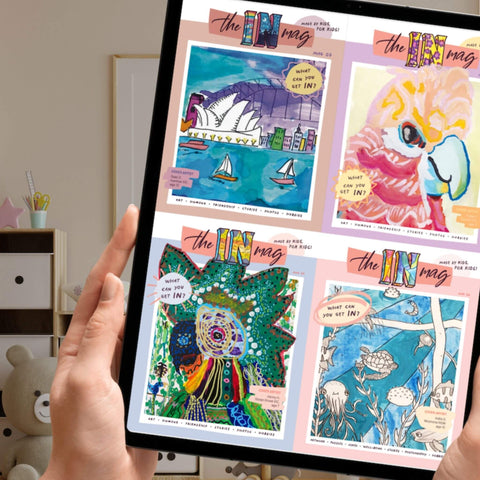
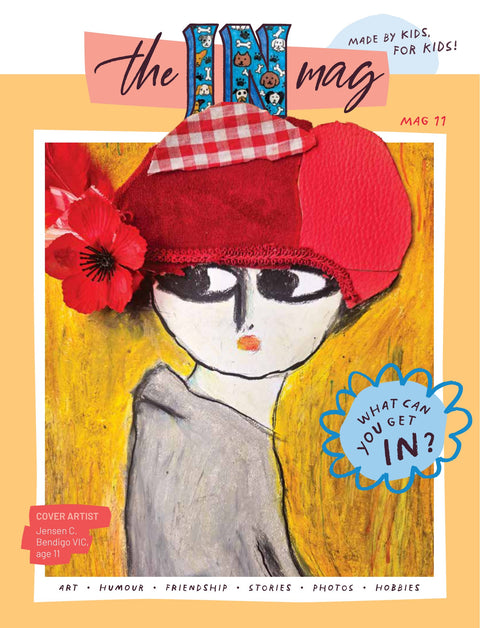
The rest? It's part of why Tam and I built theINmag the way we did. Every issue is hand-curated by a teaching team, full of real creations by Australian kids - writing, art, photography, maths puzzles kids have invented. We curate it with classrooms and kitchen tables in mind.
But the bigger thing - bigger than where you find the samples - is what happens to a kid when they see another kid's creation get treated like it matters. That kid starts to think, geez, I could do that. And the truth is, most of the time, there's nothing extraordinary about the creation itself. Just a kid who put in time and effort. That's something any kid is capable of.
That's the secret. Not the sample. The shift it makes in the room.
Got questions?
-
All three are the same teaching move - showing kids a finished version of the thing you're asking them to make. Worked examples is the term cognitive scientist John Sweller and the Victorian Department of Education use. Mentor texts is what most teachers in literacy call it, used in both reading and writing. A kid-created sample is the same move with a different source - the maker is another kid, not an adult. That single change shifts kids from passive engagement to active engagement.
-
Less than you'd expect, especially when the sample is the prompt and not the template. Edit it together. Pull apart the choices the writer made. Ask why a specific piece of modal language was used and what would change if it wasn't there. The conversation around the sample is the lesson. Mimicry drops sharply when analysis sits at the heart of the activity.
-
Easier than the classroom version, and it solves a problem unique to homeschool families: isolation from other kids' creative output. Pick a sample on a topic your kid is already into - their hobby, their favourite animal, a creator they follow. Read it together. Then the invitation: could you make one? One kid means infinite check-in time.