Most parents who type this into Google are weighing it up. Not picking a side, not committing to a philosophy. They're trying to understand what the words actually mean before making a call that affects the next few years of family life.
Here's the thing. We've been asking the same question.
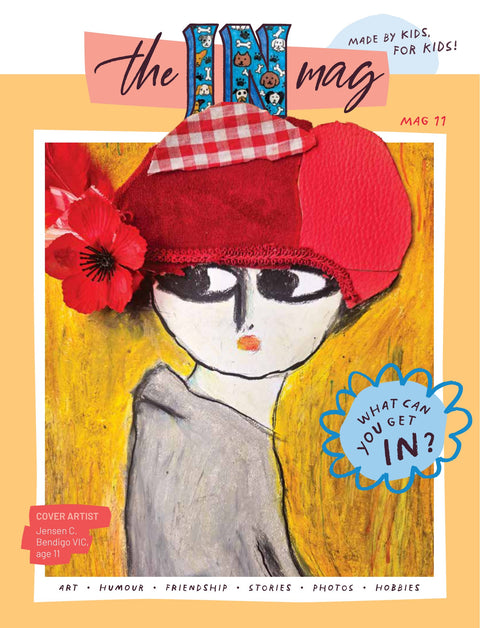
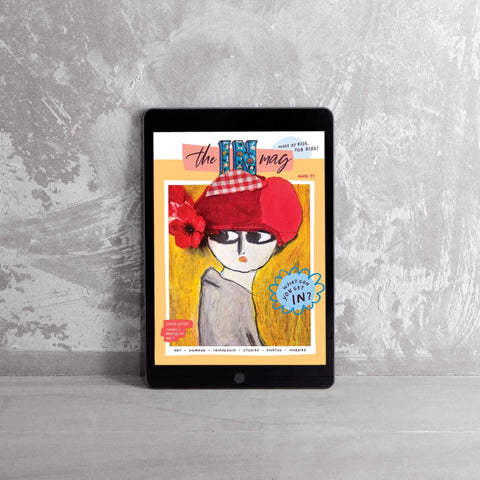
Tam and I aren't homeschoolers. We're inquiry-trained classroom teachers, and we started theINmag partly out of a growing unease with where Australian schools are heading. The shift to explicit direct instruction, kids in rows, mimicking the teacher. We wanted to try something different. A magazine made by kids, for kids, that took creativity seriously and wanted to get kids thinking.
What we didn't expect was how quickly homeschool families would find us. They saw what we were making and started using it as part of their week. So we packed up the van with Nora and started travelling. Northern New South Wales, remote South Australia, regional Victoria. Meeting these families in person.
We came at it from a typical classroom background, so we didn't really know what to expect in the homeschool world. It actually took us a long time to work out the difference between homeschooling and unschooling. The last thing we wanted to do was step on anyone's toes by using the wrong language in the wrong time or place.
What we've found, over and over, is people who want the absolute best for their kids and don't believe the current system has their kid's best interests at heart. To be clear, that's the system. Not the teachers, not school leadership. The system itself. So they're trying something else.
What is homeschooling?
Homeschooling is the umbrella term. A parent (or carer, or someone the family has chosen) is responsible for the kid's education instead of a school. In Australia that means registration with the state education authority, a learning plan, and some form of evidence that learning is happening. Rules vary state to state, but the structure is the same: you take it on, you show your working.
Within that umbrella, the day can look like almost anything. Some families run a timetable that mirrors a school day. Others work from a purchased curriculum and tick boxes against it. Others build their week around the kid's current obsession and weave maths and literacy through it. All of those are homeschooling.
So where does unschooling fit in?
Unschooling sits inside the homeschool umbrella in the legal sense. Same registration, same evidence requirements. But it's a distinct philosophy about how kids learn. The core idea, originally from American educator John Holt, is that kids are naturally driven to make sense of the world, and the adult's job is to support that drive rather than direct it.
In practice that means no curriculum, no fixed timetable, no "now we do maths." Learning shows up through the kid's actual life. A baking project that becomes fractions. A long conversation about why the river is brown that becomes geography. A deep dive into Pokémon that becomes reading. The parent is curating an environment and showing up alongside, not delivering lessons.
That sounds beautiful written down. In a real house with a real seven-year-old, it requires more presence and noticing from the parent than a curriculum-based day does, not less.
Can both actually work?
Yes, and this is the part of the conversation we keep landing on with families. We see both produce kids who are curious, capable, articulate. We also see both produce kids who are struggling or disengaged. The label isn't what predicts the outcome.
It's the same observation we'd make about schools. An explicit-instruction school and an inquiry-based school down the road can both produce kids who thrive, or kids who don't. The number one factor isn't the teaching philosophy on the wall. It's the culture of learning the leadership and teachers actually create. The quality of the noticing. The willingness to adjust when something isn't working for a particular kid.
It's the same at home. The label on your registration paperwork doesn't determine the quality of the learning. What you do on a Tuesday afternoon when your kid is bored and looking at you does.
The thing nobody warned them about - community.
If we had to pick the single biggest variable separating the families who are thriving from the families who are struggling, it's not curriculum choice. It's community.
The communities we've spent time with that actively foster this, with shared excursions, regular meet-ups, parents leaning on each other, kids learning alongside other kids, are visibly different. The parents talk about good days and hard days both. The kids have friends who get their world.
The families we've met who are doing it alone, no group, no friends doing the same thing, no one to bounce learning ideas off on a Wednesday afternoon, those are the parents carrying the heaviest load. They're still doing brilliant work. But the cost is showing.
If you're considering this path, the most useful thing you can do is find your people. It doesn't have to be in person. Online groups, video chats, a thread of three families you've never met where you can bounce lesson ideas and learning ideas back and forth. Australian homeschool podcasts are another way in. There's a great one called Sisters Who Homeschool (Tam was on it recently) where the hosts talk really openly about what their days look like and the struggles that come with doing this yourself.
If there are families within driving distance, the playground meet-ups and the joint excursions are some of the richest learning days the kids will have. For parents too.
What about following the kid's interests?
Whichever label you sit closest to, this is the thing we'd say carries the most weight. Across 15 years of classrooms and the last few years of meeting homeschool families, the kids who are actively engaged, the ones who look up and an hour has gone by (you know the feeling), are almost always working on something tied to a passion, an interest, or a hobby.
Real engagement is rarely accidental. It comes from a kid working on something they care about, where a real piece of maths or writing or science is hiding inside the thing they're already doing. That's true in a classroom. It's true at the kitchen table. It's true whether you call it "curriculum" or refuse to use the word.
If your kid is into reptiles, the path to strong literacy this term runs through reptiles. If they're obsessed with skateboarding, that's where the measurement and physics and persuasive writing live. This isn't an unschooling principle and it's not a homeschooling principle. It's just what we've seen kids actually look like when they're learning hard.
How do you actually choose between them?
We'd push back on the framing. The question parents tend to land on, eventually, is less "which philosophy am I?" and more "what does our family actually need this term?"
Some kids settle inside structure. Others switch off the moment an adult-led plan starts and only come alive when they're following their own thread. Most kids are a mix, and the mix shifts year to year.
The parents we see thriving hold the labels lightly. "Homeschoolers who lean interest-led." "We unschool most of the time but use a handwriting workbook because it works for our kid." That's not philosophical inconsistency. That's parents responding to the kid in front of them.
One small thing that helps.
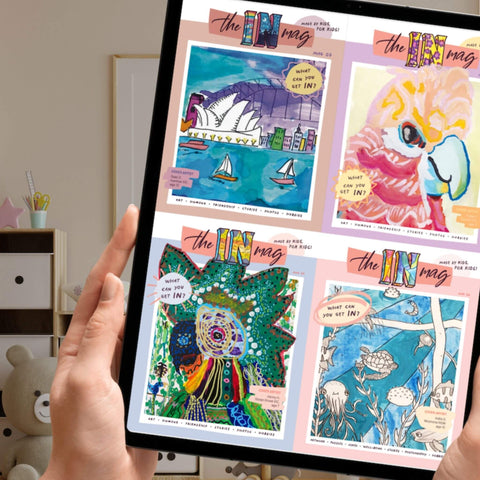
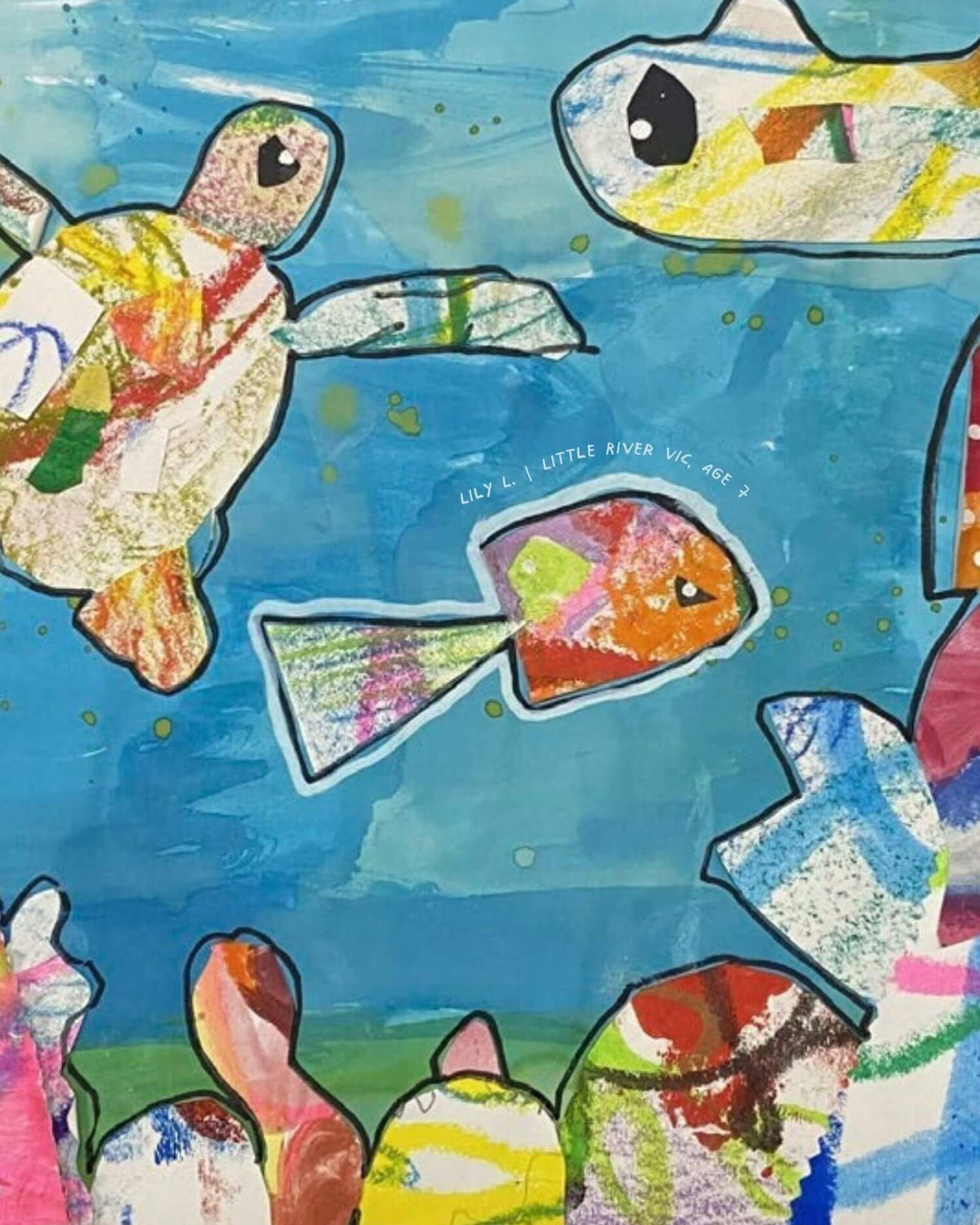
A practical note, since we make a magazine. Part of what we built theINmag for is this exact problem. Kids seeing what other kids are making, in print, and getting the permission to make their own version. Not as a curriculum. As an inlet of high-interest creativity, real samples from real kids, with the problem-solving and explaining-your-thinking and recording-your-ideas baked in.
It works in either model. Unschool families use it as a launchpad for whatever the kid wants to dive into next. Homeschool families use it as one of the moving parts in their week. School families use it on the weekend. The point isn't the magazine, exactly. The point is that kids do better when they can see what other kids their age are making, and most homes don't have that built in.
If you take one thing (well, three things) from this post.
Find your people, follow the kid's interests, and hold the labels lightly. Whichever side of the homeschool-vs-unschool line you sit, those three things matter more than the philosophy you adopt around them.
Got questions?
-
Yes, with the same caveat as homeschooling. Every Australian state requires home-educated families to register with the relevant education authority and demonstrate that learning is happening. Unschooling families register as homeschoolers and submit evidence in whatever form their state accepts. The philosophy is legal; the registration is non-negotiable.
-
By what measure? If the measure is 'can do Year 4 maths in Year 4,' some unschooled kids are ahead, some are behind, and the same is true of kids in school. The more useful question is whether the kid is genuinely curious, comfortable with not knowing things, and willing to push through hard problems. Those traits predict later learning more reliably than where a kid sits on a Year 4 scope and sequence.
-
Most families we've met on the road do exactly this. A handwriting workbook four mornings a week because the kid likes the structure, then the rest of the day is interest-led. Or three terms structured and one term completely open. The labels are useful for talking about approaches, not for boxing yourself in.