There's a piece of NASA research I think about a lot. In the late 1960s, George Land was hired to design a creativity test for engineers. He then got curious and ran the same test on 1,600 kids. At age 5, 98% of kids scored at "creative genius" level. At age 10, 30% did. At age 15, 12%. By adulthood, 2%.
The numbers are blunt. The reason behind them is more interesting.
What actually happens around age 7 or 8?
Two things start at once.
The first is internal. A kid's visual perception sharpens faster than their motor skill. They can suddenly see that the dog they drew doesn't look like the dog in their head. The gap is real, and it's frustrating, and the easiest way to make the frustration stop is to stop drawing dogs.
The second is social. Other kids start commenting. Teachers (with the best intentions) start grading. The kid who happily painted a purple sky last year gets a small, off-hand "skies aren't purple though" from a classmate, and the purple sky never comes back.
There's a great moment in Billy Madison where a teacher asks Billy why he drew the duck blue, and he says "I've never seen a blue duck before." The whole bit is meant to be ridiculous (he's a 30-year-old in third grade, the teacher is suspicious of pretty much everything he says) but the line itself is the most honest thing about creative choice in any kids' film. I've never seen one before, so I drew one. That's the entire job.
Most kids don't lose creativity. They lose the willingness to be visible in it.
What does it look like at home?
You probably already know the signs. The drawings stop appearing on the fridge. The "I made this for you" presents slow down. When you suggest drawing or building or making something, you get a flat "I'm not very good at that." Sometimes there's a hard pivot toward consuming - more YouTube, more screens, more watching what other kids made.
This is not a phase you wait out. The kids who keep creating through this dip are mostly the kids whose parents do three small things, on repeat, without making a big deal of any of them.
How do you bring it back?
One. Stop praising the output. Start naming the choice. "I love how you made the sky purple" lands differently than "wow, what a beautiful picture." The first sentence tells your kid you noticed they had an idea. The second sentence tells them you're judging the result. They will find the second one harder to live up to next time.
Two. Let them see you make something badly. Not performatively badly. Just genuinely making something - a sketch, a poem, a card, a fix to a wonky shelf - and being okay with it being imperfect. Carol Dweck has spent decades on this exact point: kids absorb the adult's relationship with mistakes more than the adult's relationship with success. If the only person in the house who never gets things wrong is you, they'll quietly assume mistakes are the thing they need to hide.
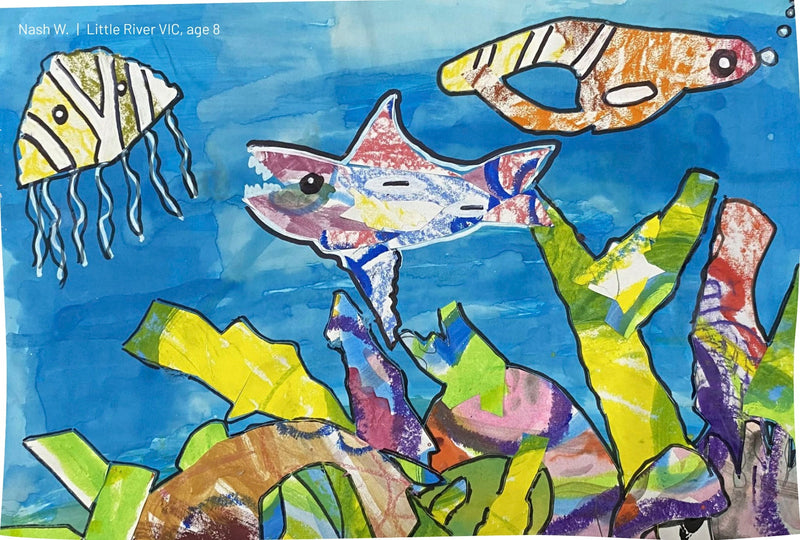
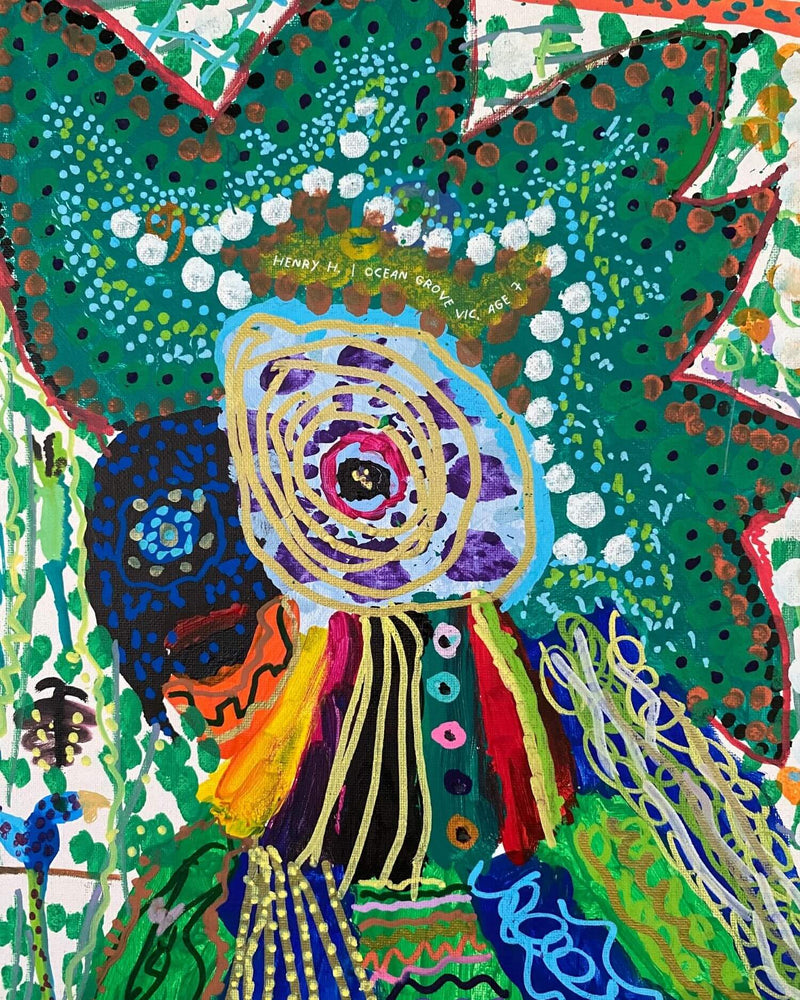
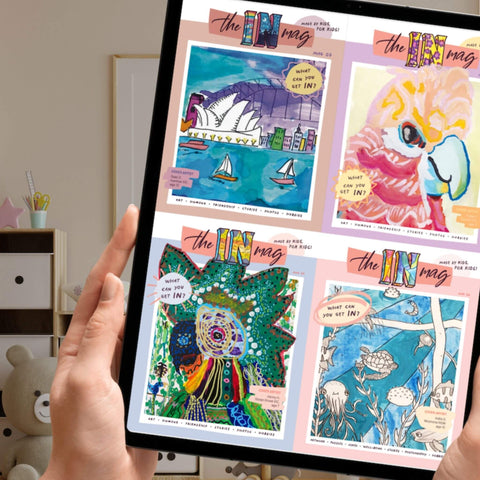
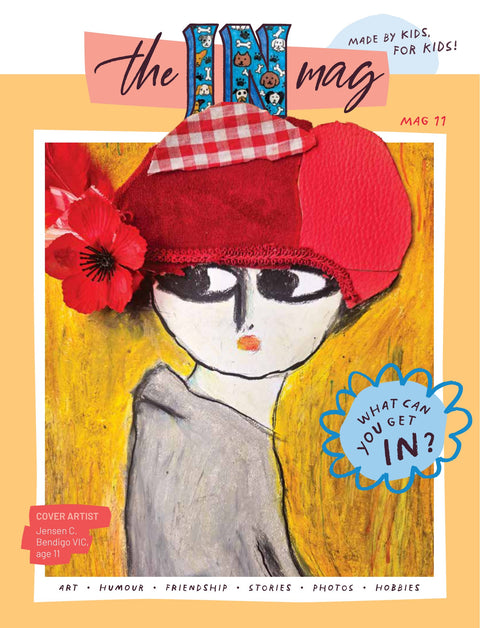
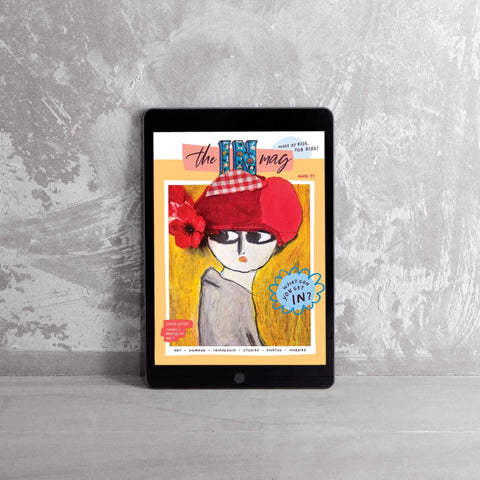
Three. Show them other kids who kept going. This is the one most parents miss. The kid who's quietly worried they're "not creative" needs to see that creativity isn't a special gift held by other people. It's just a habit. Every issue of theINmag has 200+ pages of evidence that other Aussie kids are making weird, brilliant, half-finished, completely-finished things every single week. Sometimes the cure for "I'm not creative" is just seeing that the kid down the road is.
What if my kid says "I'm bad at art"?
The honest answer: don't argue with them. Saying "no you're not, you're great!" is the opposite of what they need to hear, because it confirms there's a scale they could be bad on.
Try: "What were you trying to make?" Or: "Want to show me which bit you like?" Or, when in doubt, lean into the Billy Madison defence: "Have you ever seen a blue duck? No? Good. Draw one." Both questions move the conversation off skill and onto choice. The kid who feels seen for their choice quietly starts making more choices.
One last thing. Van Gogh sold one painting in his entire life. Today his stuff hangs in the Louvre. So when your kid declares their drawing is rubbish, just nod thoughtfully and go "yeah, that's how it started for him too."