What Makes Pearce, Pearce?
I grew up in a small village called Stanwell Tops. There are no shops, but it's in an amazing location on top of the Illawarra escarpment. This meant that within a small area, there was a big variety of bushland - from upland swamp heath and sandy, dry sclerophyll bushland with billabongs, to subtropical rainforest with waterfalls and soaring sandstone cliffs.
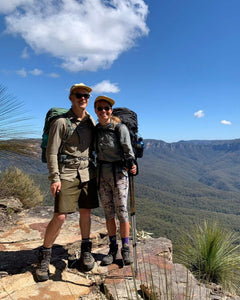
I spent my whole childhood roaming through these landscapes, making my own fun, by myself and with other local kids. Building bike jumps, catching yabbies, and making cubbies as kids soon turned into rock climbing, hiking, and surfing in high school. These last three have become the main hobbies I still do, and pursuing them has shaped me and informed almost every life decision I've ever made. Eventually they turned into my career.
Recently, I learnt that I am neurodivergent. As I get older and learn more about myself, I look back on how I grew up and the choices I made, most of which were characterised by traits of being Autistic. It has been my greatest strength, and I don't think I would have the amazing life I do today without being neurodivergent.
What Does A Drone Pilot Ecologist Actually Do?
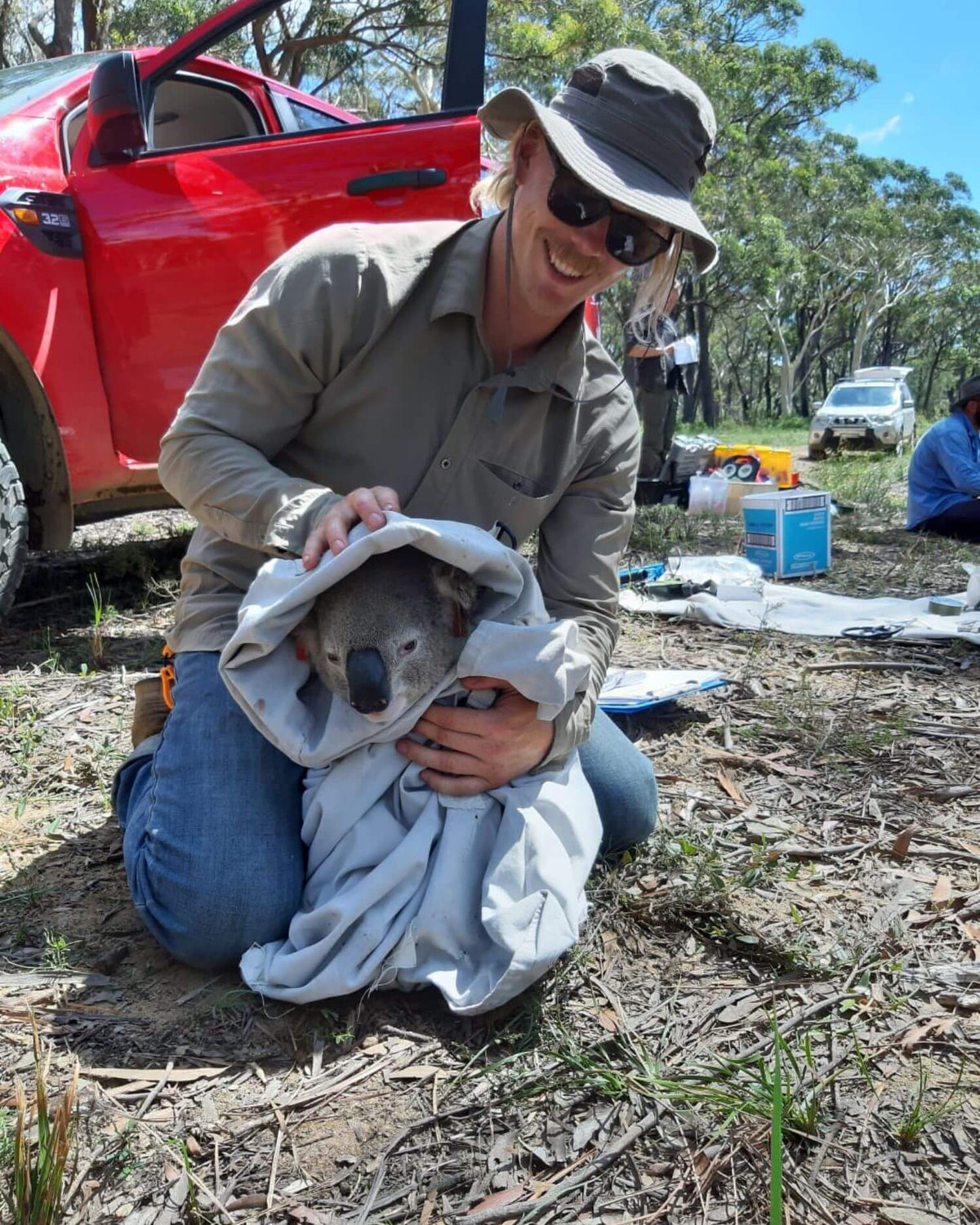
I am self-employed. Predominantly, I am a drone pilot ecologist with a specialised focus on arboreal species (that's animals that live in trees), particularly koalas and greater gliders. I do other odd jobs too, such as koala catching and plant identification.
Undertaking drone surveys for koalas is a bit unusual because I use a thermal drone. That way I can see the heat signatures of koalas in trees. The colder the temperature, the better the koala's heat signature stands out. This means all my work is done at nighttime, and mostly during winter. It can get very cold.
Finding koalas can be rather difficult. The drone detects any heat signature in the landscape. Most of the skill involved is being able to identify which heat signature is the right one to look at. If I stopped to look at every thermal detection, I would never get any surveys done, especially as I am surveying up to 250 hectares a night.
To help in this process, my drone has a spotlight attached so I can zoom in and get a good look at any promising thermal signatures. Hopefully it's a koala, but often it can be an owl, a yellow-bellied glider, greater glider, or ringtail possum.
The data I find is used in different ways. Mostly, it helps inform where koalas are in the landscape, as well as their health and abundance in areas before and after disturbances such as logging, housing development, and bushfires. As drone technology evolves, its application in conservation and environmental management is evolving rapidly.
The primary challenge of my job is that these surveys are often in very remote locations across NSW. Last year, I spent 140 nights camping in my Troopy. Luckily, my wife joins me to help on some of these remote surveys. However, most of that time is spent alone in remote bushland, so being self-reliant and comfortable by yourself is very important.
How Did Pearce End Up Flying Drones For Koalas?
In Year 10 in high school, we had a career advisor come to school. In my appointment, I told them I wanted to work in the bush but in a skilled, technical capacity. I was told I should try becoming a landscaper, as my grades weren't good enough to be an environmental scientist.
At school, I just didn't feel like the classroom environment and tests allowed me to express my intelligence. I would excel in classes that caught my attention, such as English and Geography. Despite trying really hard (I even quit sport in Year 11 and 12 to focus on studying), my Year 12 HSC score was so bad I didn't meet the requirements for any university courses.
I spent a gap year working as a pool lifeguard to save enough money to volunteer in Nepal, hike the Himalayas, and traipse around India and Thailand rock climbing. This gave me lots of time to think and build up my self-confidence. After all, no one else in my grade was doing something as adventurous as I was.
When I got home, I wrote to the Dean of Landscape Architecture at the University of Canberra. She said my letter convinced her to waive my HSC score and let me join.
In Canberra, as part of the degree in Landscape Architecture, I studied lots of environmental science units. Suddenly, I could choose specific units of study that I was interested in: river morphology, botany, Indigenous perception of landscape, to name a few. I did so many of these units that I stayed on for another year and graduated with both a degree in Landscape Architecture and Environmental Science. Where I failed in high school because I had to study maths, business studies, and modern history (my least favourite subjects), now I could thrive learning about things that interested me.
All through my 20s, I would work just enough to save money for the next climbing or hiking adventure. This allowed me to grow and mature, have fun, and gain valuable skills and experience that would eventually inform my career trajectory. I always found I could thrive when I was put in remote, harsh environments for long periods. I was comfortable in these challenging conditions. I never knew it could be an employable skill.
When I did work, it was always in an environmental role. I was a NPWS Ranger, remote area firefighter, flying fox researcher, conservation volunteer manager. In all these roles, I loved the outdoors component but found it very hard to sit at a desk for longer than 45 minutes. I also find it hard to work for other people (still do), so I was usually very relieved to quit and go on another adventure. I've since learned that this repeated burnout, around 10 months into a new job, is a common characteristic of people with Autism. I used to worry that I would never find a job I felt I could do for longer than 10 months and that my scattered, hodgepodge resume would start to look bad when I applied for jobs.
One day when I was 31, I received a call from a friend who worked in koala research. They said they needed someone with rock climbing skills and an ecology background to climb up trees to catch koalas. I thought, wow, that sounds like a fun job. I'm very lucky to have a cool, understanding wife who thought quitting my job at an environmental consultancy to become a contract koala catcher was a good idea. I said yes, and suddenly I was working with other people like me, people who couldn't stand being in an office but were very talented, passionate field ecologists. I finally felt like I found a type of work that fit me perfectly. Because the work captured my attention fully and I was in control of my workload, I thrived, and could avoid the burnout that sitting in an office all day caused me.
Eventually, I met a senior research scientist on one such contract who said he was pioneering a new idea: using drones to detect koalas. Previously, we would walk around in the bush all night with torches looking for koala eyeshine (fun fact: koalas' eyes look like giant white orbs in the dark when light is shone on them). This was very labour-intensive and ultimately not very effective. He gained some funding and asked if I could help be part of a small team trialling this new methodology. Four years later, it has now become the industry standard, and I am very busy undertaking these surveys for various government departments, universities, consultancies, and non-government organisations.
What Is Pearce Most Proud Of?
It is very difficult to pinpoint one single thing to be most proud of. A very formative experience occurred when I was 23. I was struggling with burnout in my final year of university. Between semesters, I had a spontaneous reaction and spent the last of my savings on a flight to Japan. I flew out three days later to undertake the 88 Temple Pilgrimage on the island of Shikoku.
When I was a teenager, my mum had bought me a book about great adventures for my birthday. On the last page of the book was one photo and a few paragraphs about an ancient Buddhist pilgrimage in Japan that was 1,400 km long and visited 88 temples. It immediately caught my attention, and I filed it away in my mind as something I'd love to do one day. When I left to attempt this walk, I didn't take my phone, iPod (remember, this was back in 2013 when people still used iPods), or even a book. I wanted to be totally disconnected.
Little did I know, I was arriving during the worst time of year to do the walk: monsoon season. It was 35 degrees, 100% humid, and raining every day. I walked in pouring rain for weeks at a time, camping under trees, in abandoned temples, on park benches, and anywhere else I could find out of the rain.
The generosity of people in the villages I passed through was what sustained me. Often they offered me a meal, a hot shower, and sometimes even a bed in their home for the night. I learned that someone undertaking this pilgrimage is considered to be bringing good karma to their village, so people will offer assistance where they can to return the good karma of a Henro (pilgrim in Japanese).
However, as the walk continued, I developed horrendous blisters, my shoes fell apart, and I walked the last 260 km in some sandals I found. It took me 48 days to complete the walk. I can say with absolute confidence that who I was when I started was a fundamentally different person from who I was when I finished.
As I walked the last few days of the trail, I realised I could do anything I wanted in life. Through this adversity and self-learning, I have become proud to have built a life that I don't feel the need to escape from.
Got questions?
-
Two main ones. The first is reading thermal signatures - learning which warm spots in a dark forest are actually koalas, not owls or possums. The second is being self-reliant. Pearce often surveys alone in remote bush all night through winter, so being calm and capable by yourself is just as important as flying the drone.
-
His Year 12 score wasn't high enough for any uni course, so he took a gap year, travelled, and wrote a letter to the Dean of Landscape Architecture at the University of Canberra. She said the letter convinced her to let him in. He then chose subjects he was actually interested in - rivers, plants, Country - and did so well he stayed on an extra year and graduated with two degrees.
-
A bit. Pearce's job runs on noticing - which animal is in which tree, what's moving in the dark, what's different tonight. You can practise that anywhere there are animals: a backyard, a park, a bush walk. Pick one tree near where you live and visit it a few times a week. Watch what comes and goes. Give it as long as you want. Noticing is the skill.